- Event / Topics
- Event
- Vehicle
- NEWOct. 06, 2026
Daihatsu to Exhibit at Japan Mobility Show Bizweek 2026 Seeking Co-creation Partners Under the Themes of “Connecting Energy” and “Connecting People”
Oct. 06, 2026
DAIHATSU MOTOR CO., LTD.
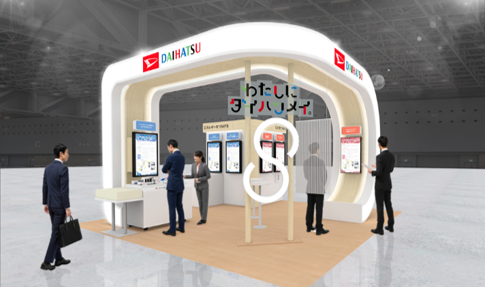
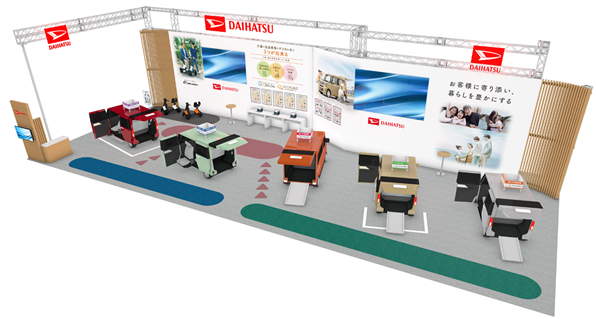
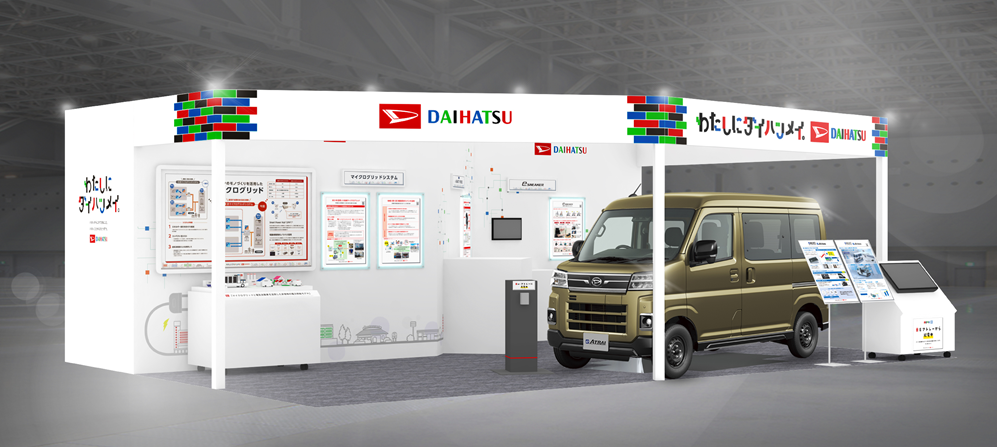
Daihatsu Motor Co., Ltd. (hereinafter “Daihatsu”) will exhibit at Japan Mobility Show Bizweek 2026, to be held at Makuhari Messe International Exhibition Hall (Mihama-ku, Chiba City, Chiba Prefecture) from October 13 (Tue.) to October 16 (Fri.), 2026. Organized by the Japan Automobile Manufacturers Association, Inc. (JAMA), the event aims to create business co-creation opportunities between mobility-related companies and startups shaping the next generation. Under Daihatsu’s brand message, “DAIHATSUMEI for me. Invented for you.,” the Daihatsu booth will feature six exhibits addressing the “New Seven Challenges” identified by JAMA.
This year’s exhibit will focus on two themes, “Connecting Energy” and “Connecting People.” Through these exhibits, Daihatsu will introduce initiatives aimed at realizing carbon neutrality and addressing regional challenges, while seeking collaboration with new co-creation partners to promote social implementation.
Under “Connecting Energy,” Daihatsu will showcase its ammonia/hydrogen co-firing engine, which will be displayed as an actual engine unit for the first time, as well as a regional microgrid utilizing BEVs, for which demonstration testing has been underway since last year, and a regional resource circulation project developing carbon-neutral fuel (biogas) at its Shiga (Ryuo) Plant. In particular, for the ammonia/hydrogen co-firing engine, Daihatsu is seeking partners to jointly address challenges in ammonia reforming, exhaust gas purification, downsizing, safety technologies, and supply infrastructure.
Under “Connecting People,” Daihatsu will introduce initiatives related to service and operational transformation using AI and digital technologies, as well as efforts to address mobility challenges in regional welfare and nursing care. The company aims to expand collaboration with local governments, welfare and nursing care operators, transportation providers, and digital technology companies.
<JAMA Joint Exhibition>
Ammonia/Hydrogen Co-firing Engine (Actual Engine Display)
<Daihatsu Booth Exhibits>
| Theme: Connecting Energy | Theme: Connecting People |
|---|---|
| [First Public Display of Actual Unit] Ammonia/Hydrogen Co-firing Engine |
[First Public Display] “DAIHATSU × stAIle” |
| Regional Microgrid Utilizing BEVs | “D-AI-hatsu Vision”: Cultivating Technology and Bringing AI into the Workplace |
| Regional Resource Circulation Project Development of Carbon-Neutral Fuel (Biogas) |
Welfare and Nursing Care Shared Transportation Service “GOISSHO” |
Daihatsu will continue contributing to the realization of carbon neutrality and the creation of connections among people in local communities and society while staying close to customers. Through both “manufacturing” and “creating experiences and services,” the company will further advance its initiatives.
<Exhibit Details>
1. Connecting Energy
[Ammonia/Hydrogen Co-firing Engine] (First Public Display of Actual Unit)
This initiative expands carbon-neutral fuel options by utilizing ammonia, which is expected to serve as a hydrogen carrier due to its ease of liquefaction and relatively high energy density. A portion of the ammonia stored in a dedicated tank is reformed into hydrogen using a plasma reactor and catalyst mounted on top of the engine. By co-firing the generated hydrogen with ammonia, which is difficult to ignite, the system aims to achieve both sufficient driving range and stable combustion. An actual development-stage ammonia/hydrogen co-firing engine will be displayed at the JAMA joint exhibition booth.
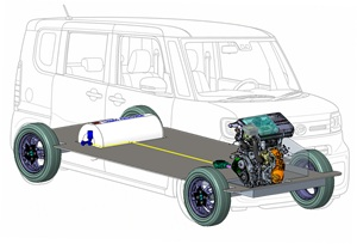 <Vehicle Installation Concept of the Ammonia/Hydrogen Co-firing System>
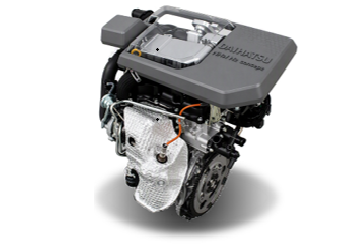 < Ammonia/Hydrogen Co-firing Engine >
[Regional Microgrid Utilizing BEVs]
This is a DC-based microgrid system that combines solar power generation, storage batteries, and battery electric vehicles (BEVs). Power conversion equipment, including the Smart Power Hub® (SPH®*1), is integrated into a transportable container, while BEVs serve as mobile storage batteries. The system helps reduce peak electricity demand during normal operation and contributes to lowering CO₂ emissions. In the event of a disaster, it can continue supplying electricity even when grid power is disrupted, thereby supporting the continuity of public services and other essential functions.
*1 Smart Power Hub and SPH are registered trademarks of Toyota Central R&D Labs., Inc.
[Carbon-Neutral Fuel (Biogas)]
This initiative promotes resource circulation within Ryuo Town through collaboration among crop farming, livestock farming, and manufacturing (automobile production). Biogas generated from manure produced by Omi cattle is utilized as carbon-neutral fuel at an automobile manufacturing plant. Compost and liquid fertilizer remaining after fermentation are then reused in agriculture.
2. Connecting People
[DX Application “DAIHATSU × stAIle”] (First Public Display)
This experiential application uses AI to analyze visitors’ clothing, colors, and overall appearance captured at the booth and recommends the Daihatsu vehicle from past and present models that best matches each individual. The AI also generates an original illustration featuring the visitor alongside the recommended vehicle. The completed illustration can be downloaded to the visitor’s smartphone via a QR code*2.
*2 QR Code is a registered trademark of DENSO WAVE INCORPORATED.
[“D-AI-hatsu Vision”: Cultivating Technology and Bringing AI into the Workplace]
This initiative develops human resources capable of building and implementing AI-based inspection systems in manufacturing workplaces, even without specialized expertise. Daihatsu has developed an in-house no-code tool that supports processes ranging from data preprocessing to implementation on production equipment. Together with guidance from its DX promotion organization, manufacturing teams are able to develop AI models themselves and utilize them to improve quality assurance and reduce workload in their own processes.
[Welfare and Nursing Care Shared Transportation Service “GOISSHO”]
“GOISSHO” is a service developed by Daihatsu that promotes shared transportation among welfare and nursing care facilities within a community. Starting with a shared transportation service, it helps alleviate workforce shortages in the welfare and nursing care sector while securing transportation options for people with mobility challenges.
By making more efficient use of vehicles and drivers within a community, the service reduces transportation burdens on welfare and nursing care facilities and contributes to the development of sustainable local transportation systems.