Domestic Initiatives
-
Fundamental Approach
-
Domestic Initiatives
-
Overseas Initiatives
Main Social Contribution Activities
Activity Case Studies (Japan)
RAKUPITA SOUGEI Operation Management System for Social Welfare and Nursing Care Facilities
RAKUPITA SOUGEI is a nursing care operational support system that can be introduced at adult nursing care and welfare facilities, as well as by various organizations responsible for pick-up and drop-off operations. Pick-up and drop-off accounts for around 30% of a facility’s operations and causes a psychological burden for around 60% of caregivers. RAKUPITA SOUGEI is a service that helps improve the productivity of nursing care facilities. The system achieves this by using a cloud system and smartphone app to change the traditional method of manual pick-up and drop-off operations and by solving problems that occur before pick-up, during transportation, and after drop-off. This service is already in use at many facilities throughout Japan and helps to satisfy pick-up and drop-off planners, drivers, administrators, users, and their families.

Goissho Shared Pick-up and Drop-off Service for Social Welfare and Nursing Care Facilities
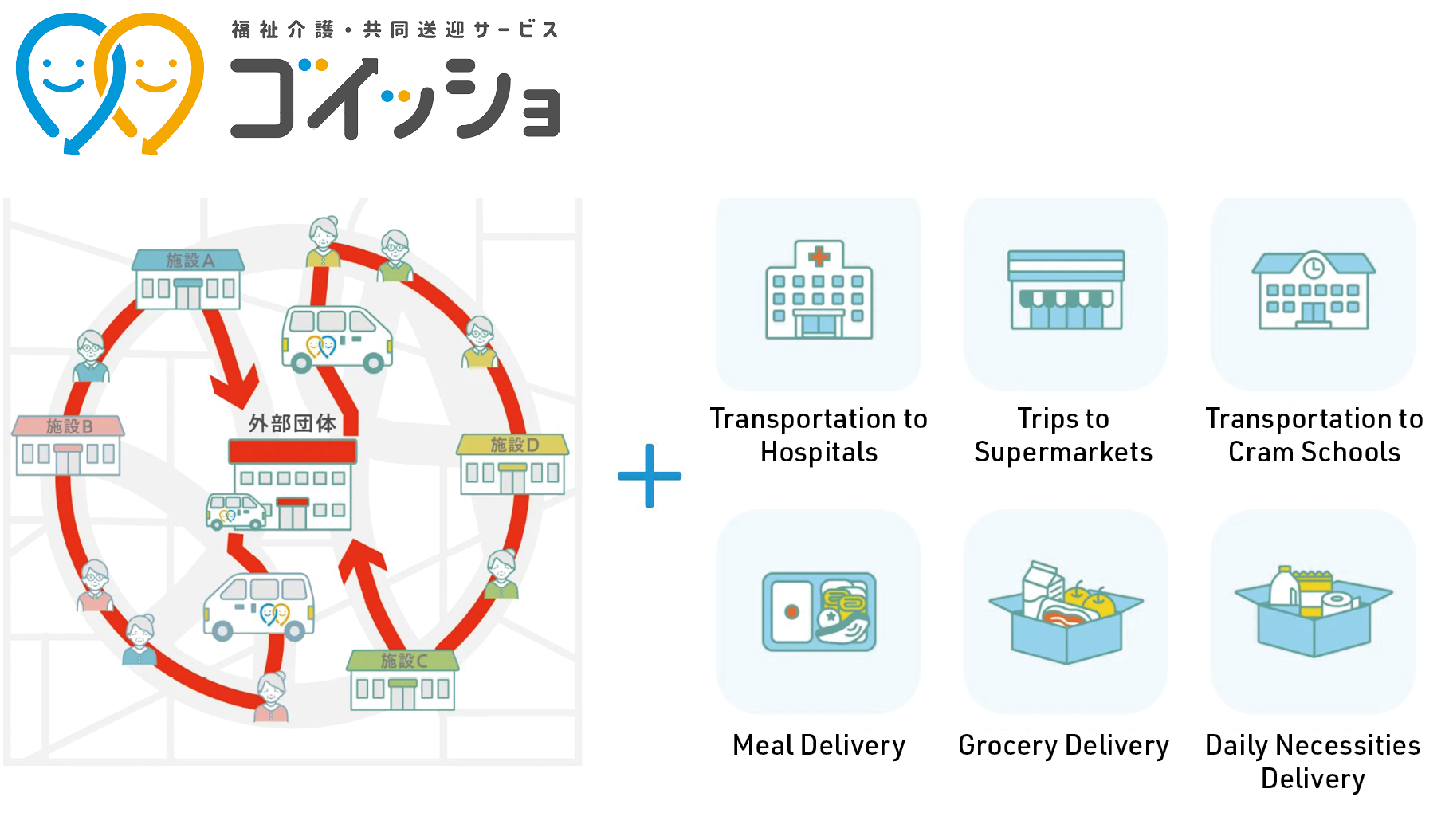
Daihatsu has focused on reducing the burden of pick-up and drop-off operations at nursing care facilities through RAKUPITA SOUGEI. As a solution to the shortage of nursing care personnel, which is becoming more serious due to increased demand caused by an aging population, we have examined a shared transportation model in which pick-up and drop-off operations conducted at each adult daycare facility are consolidated by external organizations, enabling users from multiple facilities to ride together to their respective facilities. We began offering the model in 2022 as “Goissho,” a shared pick-up and drop-off service for social welfare and nursing care facilities. In addition, since most pick-up and drop-off operations at adult daycare facilities are in the morning and evening, this service allows free time and vehicles to be used for daily mobility services such as shopping and hospital visits. By expanding the use of Goissho, Daihatsu aims to contribute to the provision of sustainable, high-quality nursing care services and the securing of daily mobility services. Goissho has already been implemented in Mitoyo City, Kagawa Prefecture; Yasu City, Shiga Prefecture; and Osaka City, Osaka Prefecture, and there are demonstration operations underway in multiple other areas.
On-Demand Shared Ride Service “Choisoko1”
As part of its community-focused projects, Daihatsu is working to address local transportation challenges through the on-demand shared ride service “Choisoko.” Based on reservations made by registered users, the service calculates optimal ride-sharing combinations and routes to transport passengers to their destinations, aiming not only to secure mobility for elderly residents but also to meet diverse regional transportation needs such as shopping, hospital visits, commuting to school, and pickups and drop-offs.
Daihatsu dealerships serve as one-stop contact points for local governments, working closely with transportation operators and call centers to provide community-based support from implementation preparation through ongoing operation. Through cooperation among local residents, municipalities, transportation operators, and sponsoring companies, the initiative helps create opportunities for people to go out, revitalize community interaction, and realize sustainable regional transportation systems.

Creating a Regional Circular and Ecological Sphere in Ryuoh Town, Shiga Prefecture Through Collaboration Among Crop Farmers, Livestock Farmers, and Industry3
Daihatsu’s Shiga (Ryuoh) Plant has newly joined a local collaboration between crop farming and livestock farming in Ryuoh Town and is working to develop methane fermentation technology using manure from Omi cattle. The initiative aims to create a regional circular and ecological sphere by extracting biogas from Omi cattle manure and urine for use as plant operating energy to advance decarbonization, while returning the remaining residue to farmland as organic fertilizer. The biogas is then used as a carbon neutral fuel in aluminum melting and power generation in the plant. Liquid compost fertilizer produced from fermentation residue is currently being tested on rice, wheat, cabbage, and other agricultural products in Ryuoh, with results confirming effects equivalent to conventional compost. Going forward, the initiative will expand the area of application and further improve application techniques. Through the development of power generation systems, it will also help strengthen regional resilience against disasters and support the creation of sustainable communities. Together with local communities, the initiative will continue to evolve with the aim of social implementation.
3. Collaborative initiative among crop farmers, livestock farmers, and industry that aims to achieve sustainable development through the utilization of local organic resources.
Outline of the Biogas Project (Intra-Regional Resource Circulation)

Facility Tours
Daihatsu offers facility tours at the “Humobility World” Daihatsu history museum adjacent to the Head Office and at major production plants, introducing local communities to its philosophy and initiatives in car creation. At Humobility* World, visitors can learn through hands-on exhibits about Daihatsu’s history, its philosophy of car creating that support everyday life, the basic principles of automobiles, and technologies focused on safety, peace of mind, and environmental consideration. Visitors can also tour assembly and inspection lines at the Kyoto (Oyamazaki) and Shiga (Ryuoh) Plants. While primarily serving elementary school social studies tours, Daihatsu also opens these tours to the general public, helping deepen understanding of the automotive industry and strengthen ties with local communities.
※ Humobility: A term combining “human” and “mobility”
 Humobility World
 Kyoto (Oyamazaki) Plant
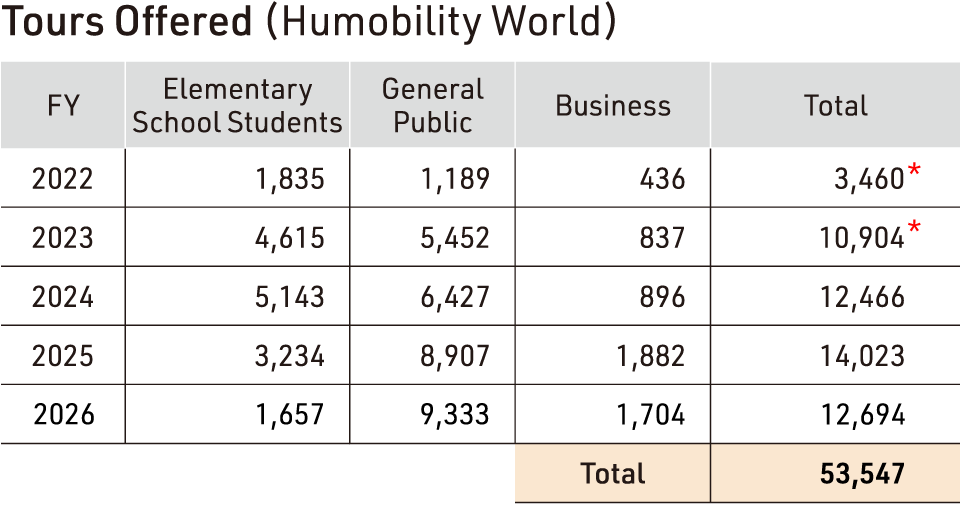
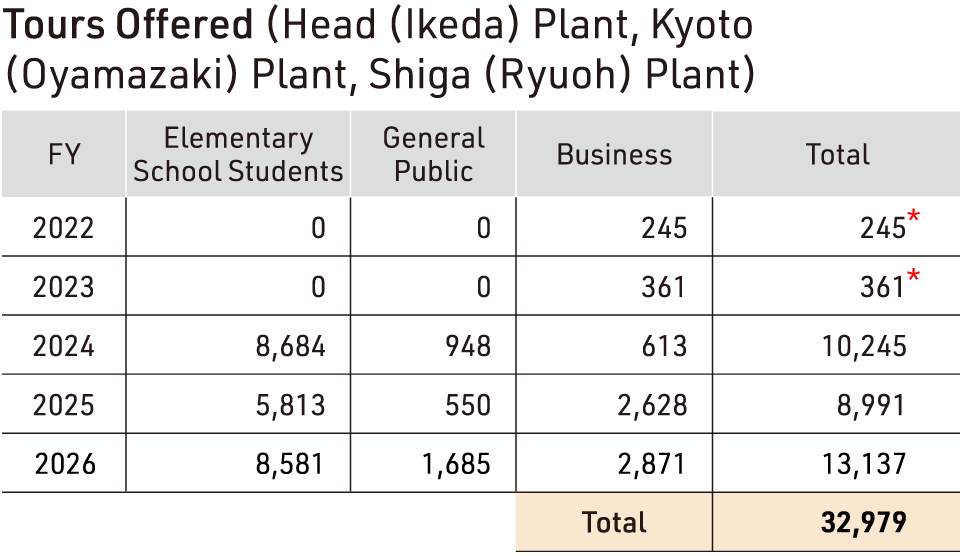
* Tours were halted during the COVID-19 pandemic to help stop spread of the disease.
Daihatsu Track and Field Team
The Daihatsu Track and Field Team was founded in 1988. It aims to inspire and encourage people through the sport of track and field and to contribute to the spread and promotion of sports. The team has produced many accomplished athletes, including representatives for the Olympic Games and World Athletics Championships, achieving strong results in competitions in Japan and overseas. The team also holds track and field classes at schools such as elementary schools in Ikeda City, where the Daihatsu head offices are located, and neighboring Kawanishi City, sharing the joy of running with children and many others while strengthening connections with local communities.
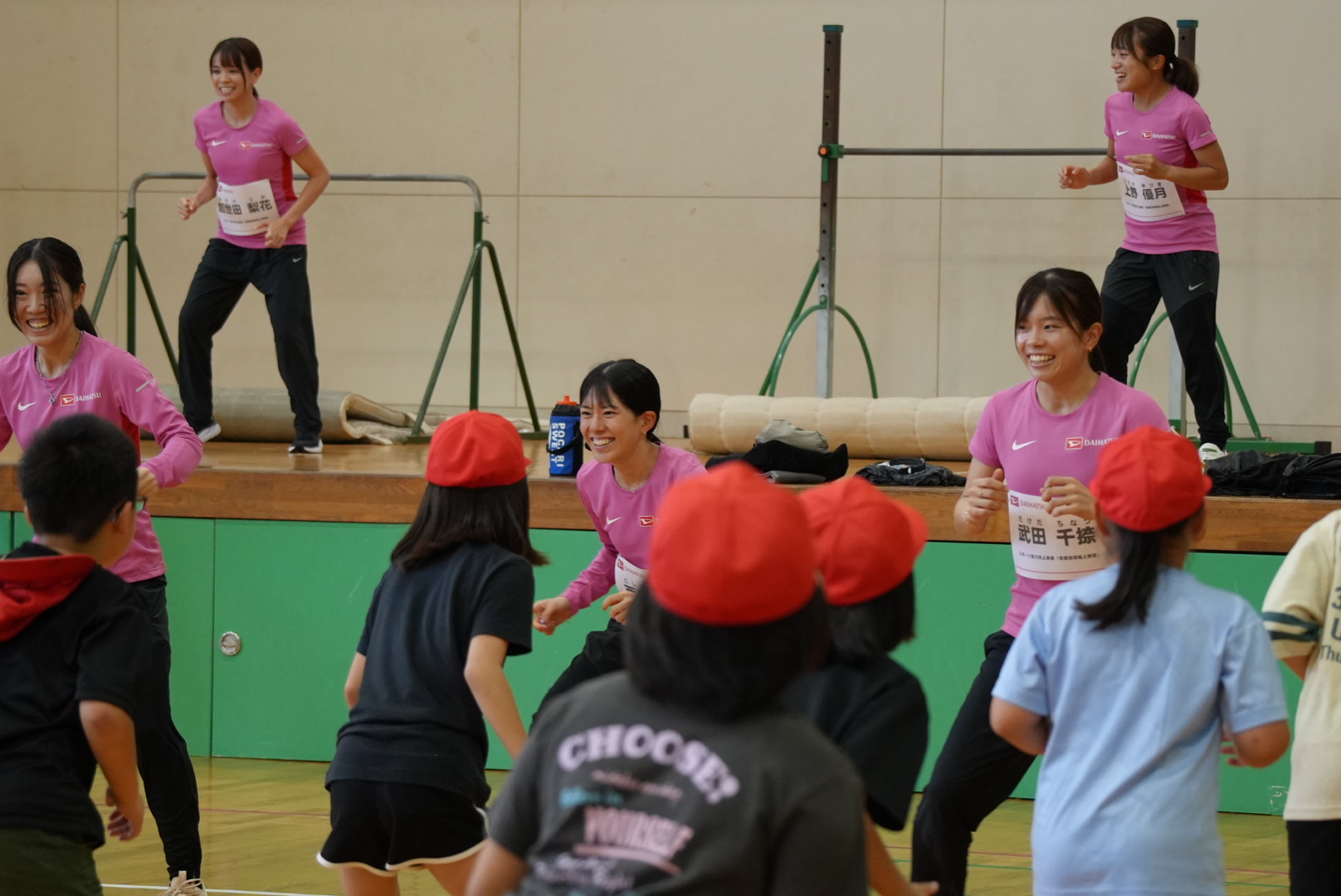
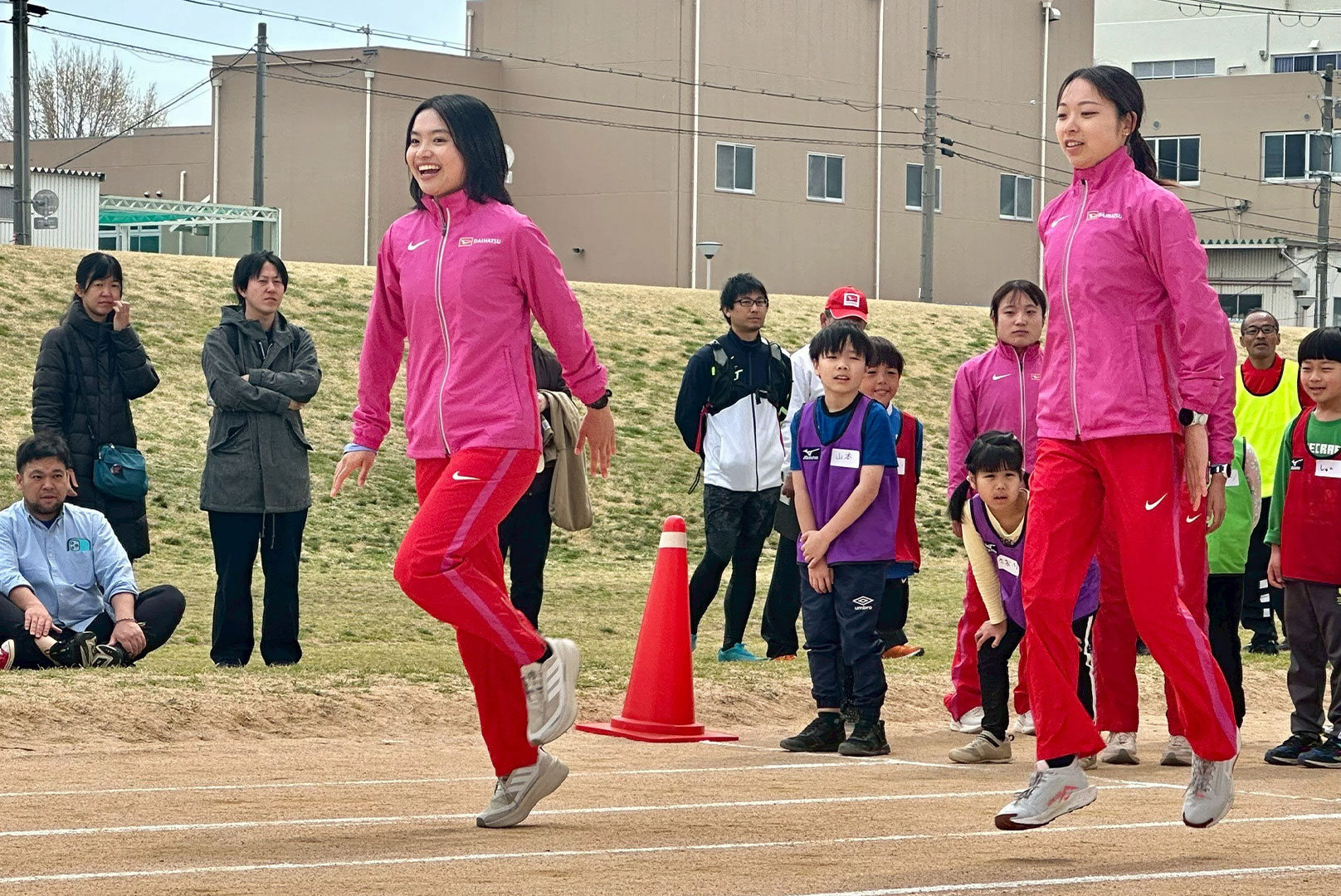 Track and field classes to communicate the joy and importance of sports
Daihatsu’s MONOZUKURI Experience Classes
Daihatsu employees have visited elementary schools near business sites to hold classes for fifth-grade students on the importance and joy of MONOZUKURI since 2015. The classes are hands-on experiences where students can see, touch, and use actual parts and tools in order to experience the principles of the manufacturing process that are difficult to convey using textbooks. We have held classes at over 300 elementary schools per year, with the participation of a cumulative annual total of over 21,000 students. In addition to elementary schools, we also host handson classes for children in local communities around our business sites.
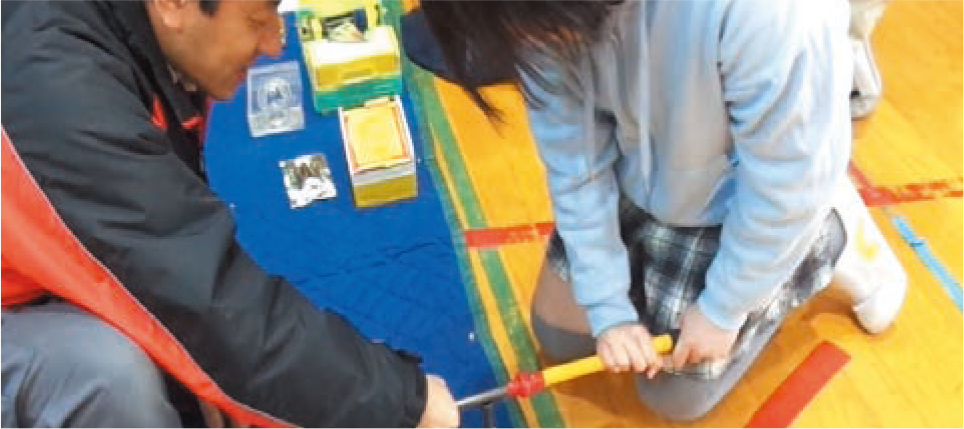 Hands-on activity using a mold and press to machine steel plates
 Experiencing tightening nuts on a tire using power tools
Developing and Dispatching Disaster Relief Personnel
Daihatsu is working to train and dispatch disaster volunteer coordinators in order to develop personnel capable of supporting local communities and disaster-affected areas during emergencies. In fiscal 2026, training courses were conducted at the Head Office Ikeda District 1 and the Tada Office, with a total of 45 participants completing the program. Including past participants, the company now has 97 trained personnel company-wide, with a target of expanding that number to 200 by fiscal 2029. In collaboration with councils of social welfare, Daihatsu is strengthening relationships with local communities and improving practical emergency response capabilities, while also advancing mutual and public assistance initiatives such as dispatching personnel for disaster recovery support.
Healthy and Safe Driving Courses
As part of their community-focused projects, Daihatsu sales companies are working to address local transportation challenges through their “Healthy and Safe Driving Classes.” These classes are conducted through collaboration among industry (sales companies, the Japan Automobile Federation (JAF), etc.), government (local governments), academia (physical therapists), and the public (local residents and community organizations), with the aim of supporting independent lives in aging communities where people can move freely, no matter how old they are. The classes include physical fitness measurement and exercise guidance by physical therapists, guidance on maintaining cognitive function, hands-on experience with preventive safety functions provided by sales companies (such as collision avoidance support braking and false start suppression control functions), and safe driving instruction by JAF, supporting safe and secure mobility for participants. The classes also give sales company staff an opportunity to recognize the importance of ties with the community.
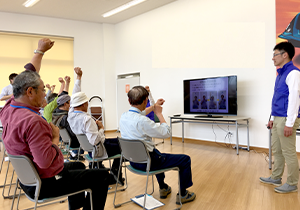 Healthy and safe driving courses
Vehicle Lending Programs for Families Raising Children
Daihatsu works in collaboration with local governments to help address regional issues. Under Ikeda City’s “Angel Vehicle Loan Program” and Ryuoh Town’s “Daihatsu Tatsunoko Family Car Provision Scheme,” vehicles are provided free of charge for three years to eligible families raising children. These initiatives help reduce the burden of daily transportation for hospital visits, pickups and dropoffs, shopping, and other needs, supporting a secure and stable living environment. They also support the creation of communities where it is easier to raise children, while contributing to the revitalization of plant-hosting regions, encouraging long-term residency, and strengthening community ties.
Dementia Supporter Training Seminar
At Daihatsu, under our mission of “Staying close to our customers and enriching their lives,” we have established “dementia supporter training seminars” for employees to cultivate personnel capable of understanding and taking action on local community challenges. In the in-person program, participants deepen their understanding of dementia through group work and learn how to provide everyday support as “supporters” who watch over people with dementia and their families without prejudice. To date, 22% of all employees have completed the program, helping expand a culture of mutual support while working toward communities where everyone can live with peace of mind.