NP Challenge (Building a Society in Harmony with Nature)
Conservation of Biodiversity
Fundamental Approach
Daihatsu undertakes initiatives in accordance with the “Daihatsu Sustainability Basic Policy” with the aim of developing a sustainable earth and society. As one aspect of these efforts, we formulated the “Daihatsu Biodiversity Guidelines” (a self-initiated policy) in January 2016. The Guidelines comprise our fundamental approach concerning measures relating to biodiversity and three action areas: contribution through technology, collaboration and cooperation with society, and information disclosure. We take concrete action in accordance with the Guidelines.
Daihatsu “Biodiversity Guidelines”
Based on an awareness of the importance of biodiversity, Daihatsu takes action to address biodiversity in accordance with the Daihatsu Sustainability Basic Policy in areas such as the automotive and related businesses and contribute to solutions to social issues with the aim of creating a livable earth and prosperous society and achieving their sustainable development.
Initiatives
The automobile industry directly and indirectly impacts biodiversity through resource procurement, land use, and greenhouse gas emissions associated with product use and business activities. Recognizing these relationships, the Daihatsu Group promotes biodiversity conservation activities suited to regional characteristics while collaborating with employees, local residents, local governments, civic organizations, and experts, thereby contributing to achieving a nature-positive future.
Key Initiatives in 2025
| Initiative | Overview |
|---|---|
| River and Waterfront Cleanup Activities | Conservation of waterfront ecosystems through activities such as the Inagawa Clean Campaign, Katsuragawa Basin Clean Campaign, Eharagawa Natural Environment Conservation Activities, and Arimagawa Clean Campaign. |
| Forest and Bamboo Grove Conservation | Forest conservation, including raising and planting locally sourced acorns and Kobano-mitsuba azaleas and maintaining forests in collaboration with local communities. Bamboo grove conservation activities, including bamboo shoot harvesting and bamboo clearing. |
| Biotope and Waterway Conservation | Maintenance and improvement of habitats through environmental upkeep of biotopes and waterways, as well as control of invasive species. |
| Wildlife Surveys | Monitoring ecosystem conditions through spring and autumn wildlife surveys and indicator species surveys. |
| Rare Species Conservation | Conservation activities focused on species such as the Yamato salamander and Utricularia australis. |
| Environmental Learning for Employees and Families | Promoting awareness and understanding of biodiversity through hands-on learning programs, such as environmental learning sessions. |
| Hands-on and Educational Activities for Children | Providing environmental learning opportunities for the next generation through activities such as the Children’s Eco Club National Festival and the Kurume Wildlife Explorers. |
| Awareness-Building and Outreach at Community Events | Raising awareness of biodiversity and presenting nature-positive initiatives at events such as the Kawanishi Environmental Festa, Kurume WEB Environment Fair, and Hyogo Youth Eco Forum. |
| Outreach Through Plant and Facility Events | Introducing nature-positive activities and conducting workshops at events such as the Daihatsu Ryuo Festa and the Humobility World summer vacation event. |
| Collaboration with External Organizations and Business Partners | Conservation activities and exchanges conducted in collaboration with local governments, civic groups, museums, and business partners. |
| Knowledge Sharing and Acquisition with Other Companies and External Organizations | Sharing knowledge through participation in the All-Toyota Harmony with Nature Working Group, as well as acquiring knowledge through participation in external seminars and other opportunities. |
Activity Case Studies
Promoting Sites in Harmony with Nature
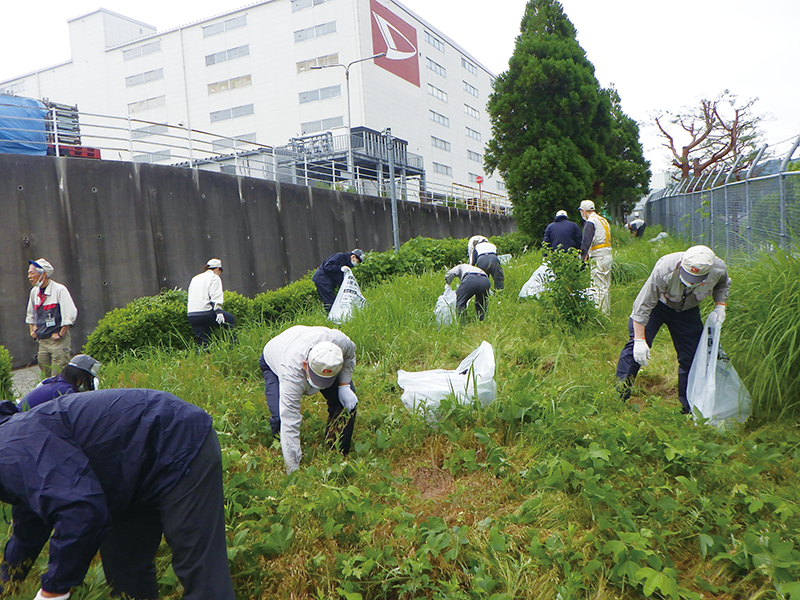 Exterminating the invasive Canada goldenrod
At the Shiga (Ryuoh) area and Nishinomiya Parts Center, activities are underway to create “sites in harmony with nature.” Based on biodiversity survey results, indicator species are selected, and efforts continue to maintain and improve habitats while controlling invasive species.
Conserving Diverse Local Ecosystems
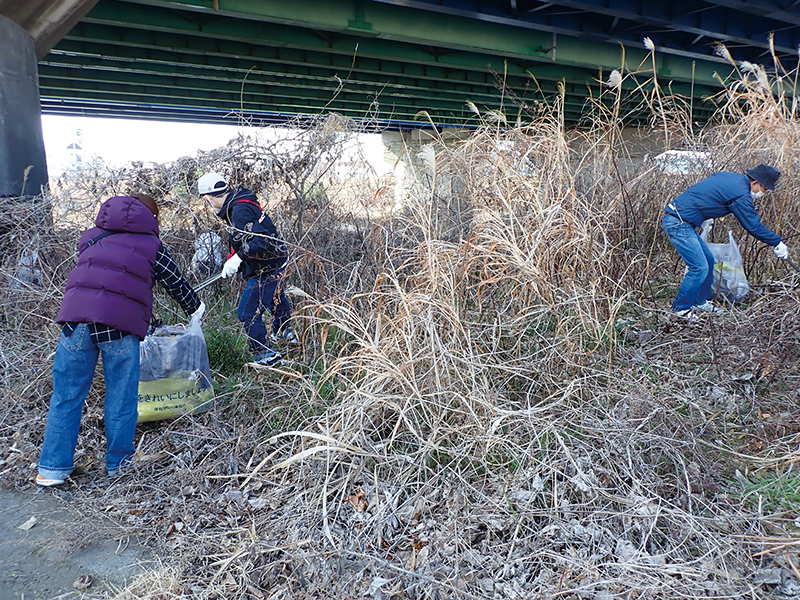 Ina River basin cleanup activities
We work to conserve local ecosystems through cleanup activities in river basins surrounding our business sites and by improving habitats for wildlife. In the Ikeda area and at Tada Engineer Center, we conduct cleanup activities in the Ina River basin, promoting environmental conservation through litter collection along riverbanks.
Kurume Wildlife Explorers at Daihatsu
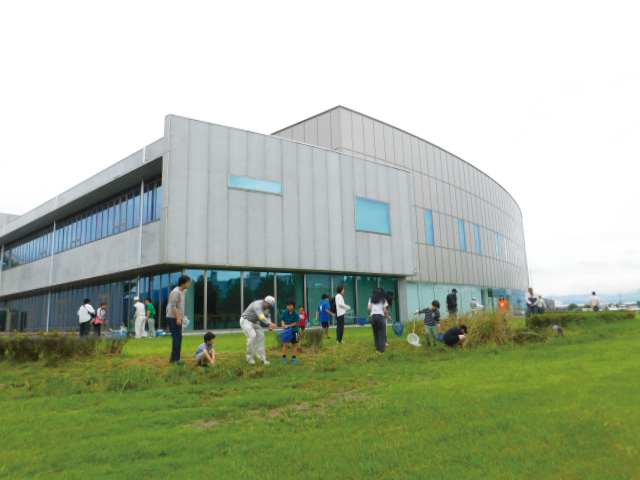 Observing wildlife in the biotope
at the Kyushu Development Center
At the Daihatsu Group Kyushu Development Center, we held the environmental event “Kurume Wildlife Explorers at Daihatsu” for elementary school children and their parents. Through observing and interacting with wildlife, the event provides opportunities to deepen understanding of nature and biodiversity while strengthening ties with the local community. The event also serves as an opportunity for participants to learn about Daihatsu’s environmental initiatives, with feedback including comments such as “It was fun to interact directly with wildlife” and “I’d like to participate every season.”
Biodiversity Conservation Through Community Collaboration
Daihatsu promotes biodiversity conservation activities rooted in local communities while collaborating with local government, civic organizations, and specialized institutions. The Tada Engineer Center partnered with the “Committee to Protect the Cherry Blossoms of the Valley,” a nature conservation organization, to participate in forest conservation activities that support the preservation of Edo Higan cherry trees. At the Kyoto (Oyamazaki) Plant, environmental improvements such as laying bamboo chips were carried out to protect the habitat of Himebotaru fireflies. At the Shiga (Ryuoh) Plant, bamboo grove conservation activities were conducted together with local Ryuoh Town residents through bamboo shoot harvesting. We also maintain ongoing collaboration with the Lake Biwa Museum and have continued providing support through donations since 2016. Since 2018, environmental learning sessions have included lectures by museum curators and support through venue provision, creating opportunities to deepen understanding of wildlife and ecosystems.
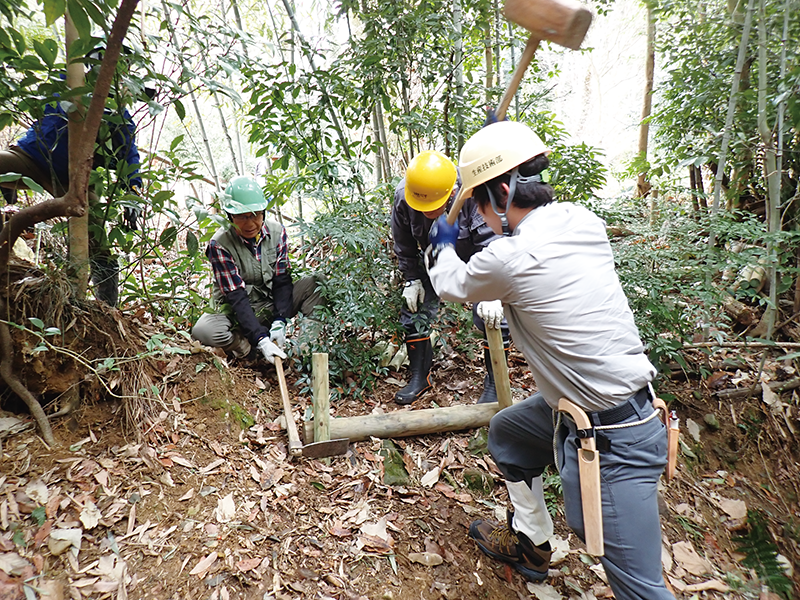 Edo higan conservation
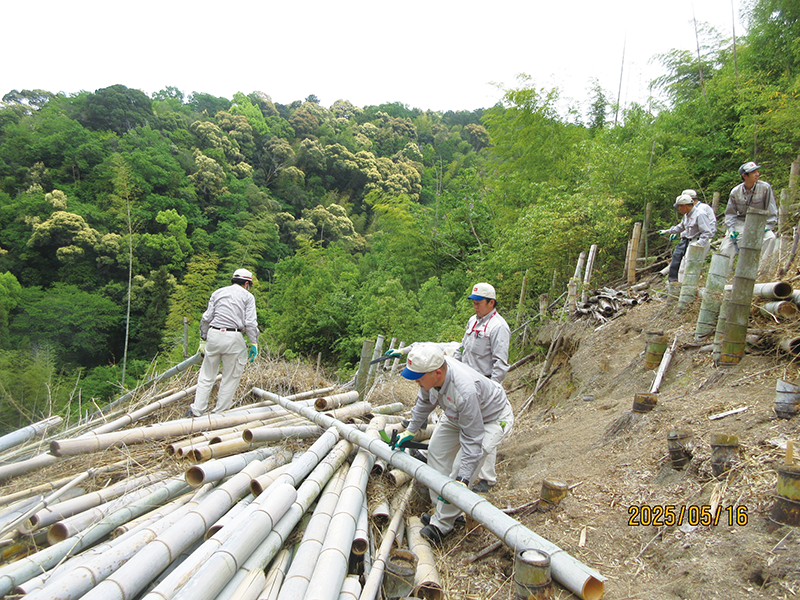 Tennozan bamboo grove maintenance
Biodiversity Biwako Network
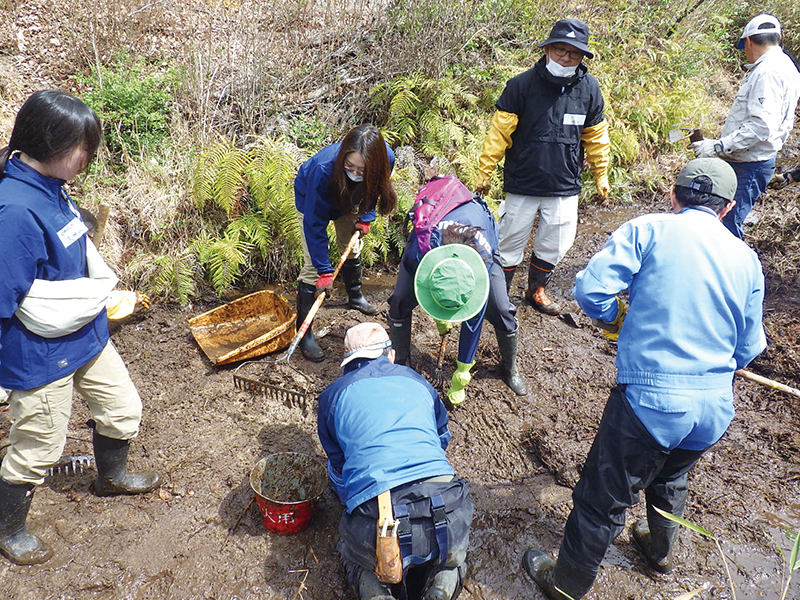 Improving the habitat of scarlet dwarf dragonflies at Shiga Prefectural Kibougaoka Cultural Park
Diverse stakeholders, including companies, local governments, NPOs, and museums, work together to promote biodiversity conservation in Shiga Prefecture. Through the shared initiative “100 Species Dragonflies Initiative: Save Shiga’s Dragonflies!” surveys are being conducted with the goal of identifying 100 dragonfly species within the prefecture, with 89 species confirmed by fiscal 2026. In addition, 115 conservation activities targeting 10 protected species were carried out, reaching 22,717 people through observation events, exhibitions, study sessions, and local exchange meetings, thereby promoting understanding of biodiversity and expanding conservation activities.