Vehicle Recycling Initiatives in the Product Design Stage
-
Fundamental Approach
-
Vehicle Recycling Initiatives
in the Product Design Stage -
End-of-life Vehicle Recycling Initiatives
-
Production
Fundamental Approach
In Japan, as much as 99% of vehicles are recycled in collaboration across users, government agencies, dismantlers, waste disposal companies, and automobile manufacturers based on the Act on Recycling of End-of-Life Automobiles. As part of the collaboration, the automobile manufacturers develop designs of vehicle structures that make it easier to dismantle and separate parts to help resource recycling.
Initiatives
Displaying Recyclability Marks
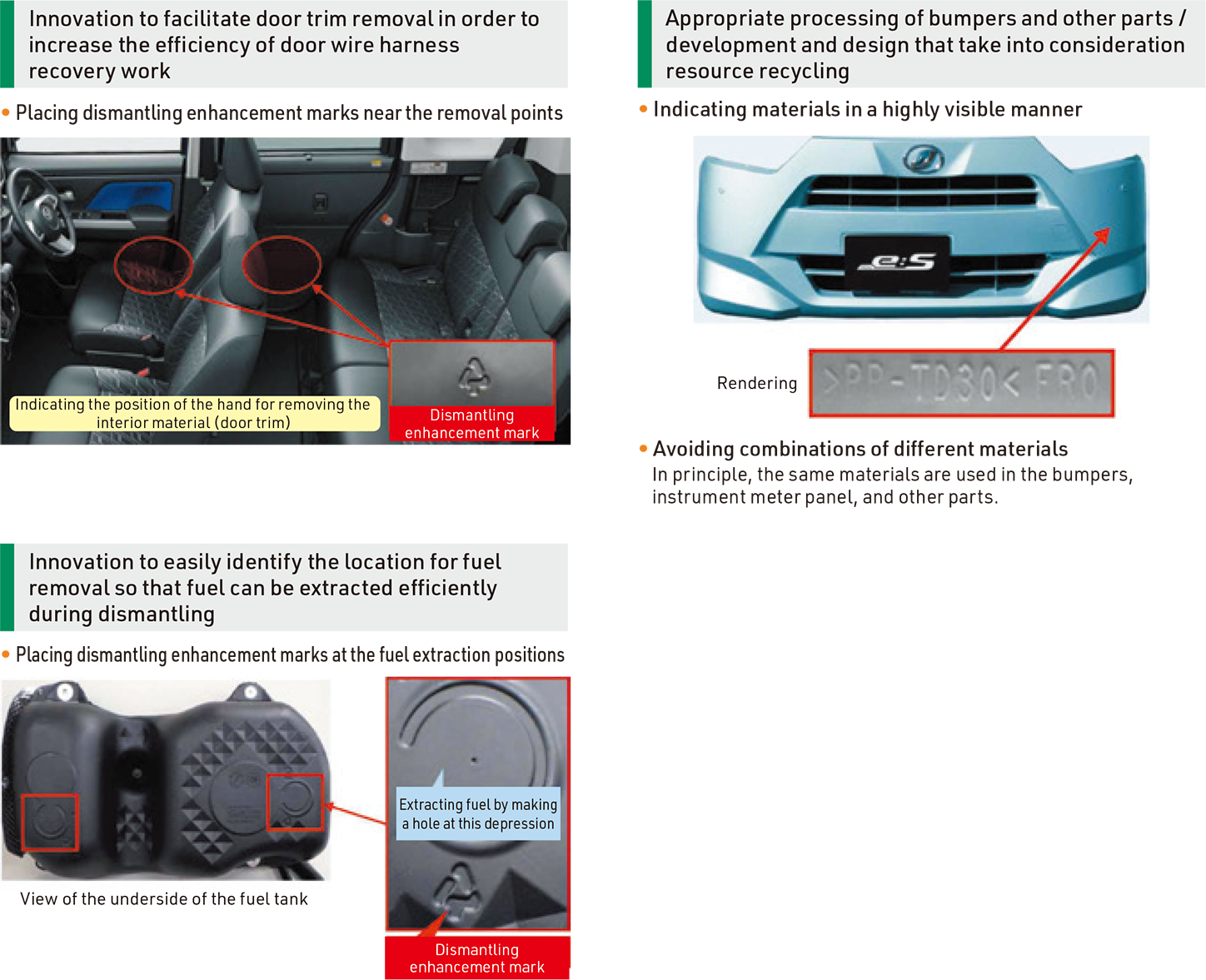
Daihatsu uses Easy to Dismantle Marks to improve dismantling efficiency and promote resource circulation during vehicle dismantling. By clearly indicating door trim removal points, fuel drainage points, and dismantling points for large components, we help streamline dismantling operations. These efforts support the proper treatment of parts and the sorted collection of materials, helping promote recycling and resource recovery.
Developing Materials Suited to Recycling
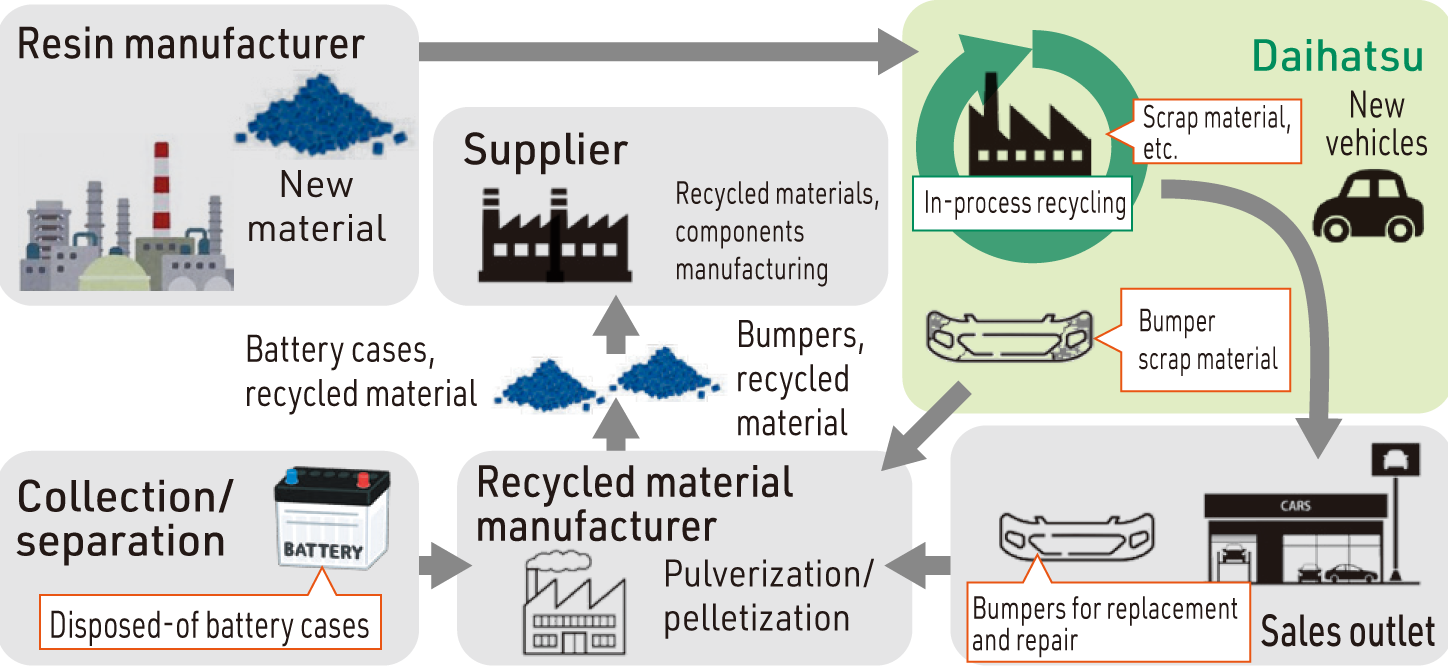
Daihatsu is working to reduce the number of different materials used, both by promoting the development of thermoplastic resins, which are well suited to recycling, and by unifying the materials necessary for the manufacture of automobiles.
Expanding the Use of Electric Arc Furnace Steel to Promote Recycled Materials
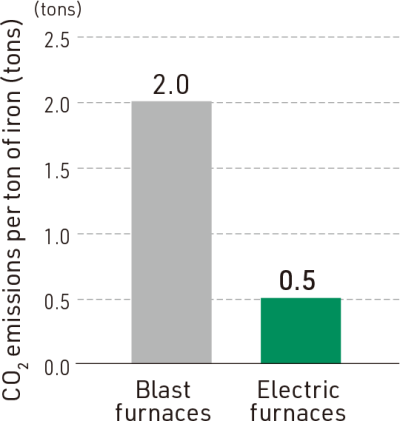
We use electric arc furnace steel, which generates approximately one-fourth the CO2 emissions of conventional blast furnace steel, for certain engine and transmission parts. Going forward, we will continue expanding the use of electric arc furnace steel in pursuit of further CO2 reductions. We will continue expanding the use of recycled materials in key materials while also improving our understanding of how those materials are being utilized.
Differences in CO2 emissions by iron production process